Computational Psychology and Computational Methods Lab
Understanding Human Behaviour through Experiments, Data, and Computational Methods
About the Lab
The Computational Psychology and Computational Methods Lab (CPCM Lab) focuses on the use of computational approaches to study the human mind and behaviour.
Our work is cross-disciplinary and seeks to answer two questions:
- How can computational methods enhance our understanding of the human mind and behaviour?
- How can psychological research methods inform our understanding of computational model behaviour?
We collect data in psychological experiments and develop and apply techniques from natural language processing, machine learning, and statistical modelling to better understand human behaviour and psychological processes.
Our lab brings together researchers with backgrounds in Psychology, Computer Science, Neuroscience, Artificial Intelligence, Linguistics, Mathematics, Law, and Cognitive Science.
The CPCM Lab is based at the Department of Methodology and Statistics at Tilburg University.
Lab updates
- [2/2026] We are hiring for two 4-year PhD positions (application
deadline: 22 March 2026) for the ERC JUSTICE project:
- Position 1 involves reinforcement learning to solve the complex problem of ethical and effective investigative interviewing –> PhD on Generative AI and Computational Modelling of Human Behaviour
- Position 2 is about combining artificial and human intelligence in high-stakes contexts –> PhD on Hybrid Intelligence and Human Decision-Making
- [11/2025] We’ve launched our 2-year master track AI for Psychological Research. If you’re interested in applying or have got other questions, please reach out.
- [10/2025] Our special issue in Legal and Criminological Psychology on the Impact of Artificial Intelligence and New Technologies on Legal and Criminological Psychology is open for submissions. For any questions, reach out to me or Riccardo Loconte.
People

Bennett Kleinberg
Associate Professor, Lab director
🌐 Website
Computational methods in psychology, machine learning for behavioural data, and methodological foundations of computational social science.

Riccardo Loconte
Postdoc
🌐 Website
Opportunities and challenges of automated verbal deception detection
This project investigates how and to what extent computational approaches stemming from machine learning and natural language processing can advance verbal deception detection at large-scale.

Sanne Peereboom
Doctoral Researcher
🌐 Website
Assessing the artificial mind through the marriage of natural language processing and psychometrics
My project is focused on understanding generative language models through psychological measurement frameworks. My work focuses on if – and how – psychometric approaches can be used to validly assess the behaviour of these models

John Caffier
Doctoral Researcher
🌐 Website
Computational methods to measure, understand, and influence prosocial behavior and trust
In our project, we apply and develop methods and tools to measure and model the dynamics of trust and prosocial behaviors - individually and at scale. Also, we explore how LLMs, apps, and other technologies, as well as humans, can actively influence these behaviors in potentially harmful or potentially constructive directions.

Rasoul Norouzi Nikjeh
Doctoral Researcher
🌐 Website
Text-mining methods for theory development in psychological and social science research
My PhD project develops text mining methods to automatically detect and parse causal claims in social science texts. It turns unstructured prose into structured who-causes-what representations and encodes them as Directed Acyclic Graphs (DAGs). This lets researchers identify recurring causal patterns, generate testable hypotheses, and conduct transparent evidence synthesis and theory refinement.

Jennifer Chen
Doctoral Researcher
Adolescent-Specific Assessment and Psychotherapy (ASAP): Innovating Idiographic Methods for Youth-Tailored Care

Tijn van Hoesel
Doctoral Researcher
🌐 Website
Spin: Questionable Research Practices in Scientific Reporting
Investigating the concept of spin (primarily found in biomedicine) and relating it to the concept of questionable research practices (primarily found in psychology). Investigating the prevalence and impact of spin in psychological research.

Weng Lam Ao
Doctoral Researcher
Understanding decision-making in transport behaviour through social media data

Jari Zegers
Thesis student / research assistant
🌐 Website
Psychological theories of deception and deception detection
As part of my master’s thesis, this project aims to improve our understanding of deception and deception detection from a psychological perspective.

Lucca Pfründer
Doctoral Researcher
🌐 Website
Human adversarial machine learning on text data for psychological inference
This project investigates how research designs from adversarial machine learning - when applied to NLP tasks, and when extended to human adversaries and human targets - can inform psychological theory for “wicked” problems such as deception.

Jonas Festor
Research assistant
🌐 Website
Simulated vs. genuine empathy
This project tries to disentangle human perceptions of LLM generated empathetic text from the ‘objective’ convincingness. This study builds on and tries to extend the investigation of stochastic empathy.

Ivo Snels
Research assistant
Simulated vs. genuine empathy
This project tries to disentangle human perceptions of LLM generated empathetic text from the ‘objective’ convincingness. This study builds on and tries to extend the investigation of stochastic empathy.

Qian Chen
Visiting Doctoral Researcher (Central China Normal University, China)
🌐 Website
Decoding distorted interpretations of ambiguity from text data
Everyday life is full of ambiguous social situations, and biased / inflexible interpretations of these situations are linked to depression and anxiety. Our work focuses on leveraging linguistic indicators of interpretation processes to improve understanding, measurement, and intervention methods that are more ecologically valid and translatable to real-world mental health.
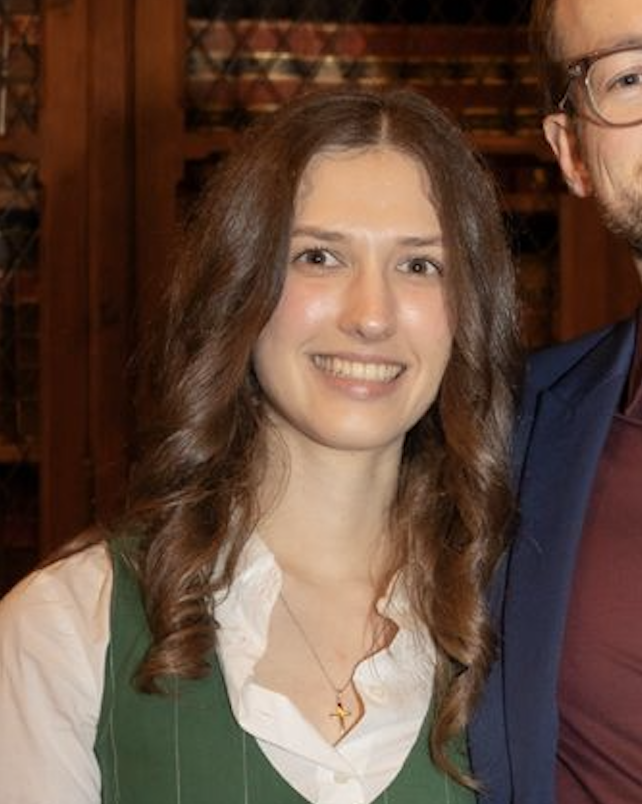
Nicola Rossberg
Visiting Doctoral Researcher (University College Cork, Ireland)
🌐 Website
Ad-Hoc Machine Learning Explainability through Psychometrics
I aim to improve the quality of explanations generated by machine learning models through an interpretability by design approach. I am designing and testing a scale to measure understandability at feature level in order to favour understandable features during machine learning model training and hence create better explanations ad-hoc.
Research
The CPCM Lab investigates how computational methods can enhance our understanding of the human mind and behaviour, and how psychological research can inform our understanding of computational models.
Research Themes
Deception Detection
- Integrating experimental data and computational methods to address the “hard problems” of deception research
- Examining how human adversarial machine learning can inform cognitive deception theory
Methodological advancements
Developing the methods needed to advance computational psychology research
- Secure and scalable methods for text anonymisation (e.g., Textwash)
- Sample size estimation algorithms for supervised machine learning
Machine Beahviour
- Understanding stochastic humanness of large language models through experimental research
- Using formal psychometric modelling to study the behaviour of artificial intelligence models and how it reflects or diverges from human behaviour and cognition.
Computational Psychology with Natural Language Processing
Using computational text analysis to study and predict psychological constructs in humans (e.g., cynicism, emotion, deception)
PhD alumni of the lab
- Dr. Isabelle van der Vegt, Understanding and predicting threats of violence using computational linguistics (supervision with Prof Paul Gill) - completed in 1/2021, positions: Scientific project manager at WODC \(\rightarrow\) Assistant Professor in Computational Social Science at Utrecht University, NL. www
- Dr. Felix Soldner, Detecting and mitigating online customer fraud (supervision with Prof Shane Johnson) - completed in 6/2023, positions: postdoc at Leibniz Institute GESIS, Cologne, Germany \(\rightarrow\) Forensic Service consultant at PWC. www
- Dr. Maximilian Mozes, Adversarial perturbations in natural language processing (supervision with Prof Lewis Griffin) - completed in 12/2023, position: Senior Research Scientist and team lead at Cohere AI, London. www
- Dr. Arianna Trozze, New forms of financial crime (supervision with Dr. Toby Davies) - completed: 12/2023, position: Senior Cryptocurrency Intelligence Scientist at Elliptic, London. www
- Dr. Daniel Hammocks, Information prioritisation for horizon scanning using data science techniques (with Prof Kate Bowers) - completed in 5/2025, positions: Senior Data Scientist at the Mayor’s Office for Policing and Crime (MOPAC), London \(\rightarrow\) Principal Data Scientist at MOPAC.
Joining the lab
How can I join the CPCM lab?
Lab members are typically postdocs, PhD students, thesis students or research interns/assistants. Thesis projects are advertised in the programmes we are involved in. There are various routes for PhD projects (e.g., a funded position via university employment, a joint PhD with another university, self-funding). All positions that are connected to employment (typically for 4 years) are publicly advertised. If you are interested in a research internship, please identify a topic you are interested in that aligns with the lab’s focus and is relevant to at least one other lab member. Reach out to Bennett via email then. Research internships should last at least 6 months since projects require a solid embedding in psychological research and computational methods..
Contact
Computational Psychology and Computational Methods Lab (CPCM
Lab)
Dr. Bennett Kleinberg, Department of Methodology and Statistics, Tilburg
University, The Netherlands
📧 [mailto:bennett.kleinberg@tilburguniversity.edu;]
© 2025 CPCM Lab — Understanding Human Behaviour through Experiments, Data, and Computational Methods